

Kogakuin University, Japan
Yoshifumi Manabe received his B.E., M.E., and Dr.E. degrees from Osaka University, Osaka, Japan, in 1983, 1985, and 1993, respectively. From 1985 to 2013, he worked for Nippon Telegraph and Telephone Corporation. From 2001 to 2013, he was a guest associate professor of Graduate School of Informatics, Kyoto University. Since 2013, he has been a professor of the Faculty of Informatics, Kogakuin University, Tokyo, Japan. His research interests include distributed algorithms, cryptography, game theory, and graph theory. Dr. Manabe is a member of ACM, IEEE, IEICE, IPSJ, and JSIAM.
Abstract: Because the design of cryptographic protocols involves mathematical arguments, it is difficult to convey the concepts of cryptography to beginners. Card-based cryptography, on the other hand, uses physical cards rather than computers to implement cryptographic protocols, making its principles intuitively understandable. This talk introduces card-based cryptographic protocols that implement secure computation and zero-knowledge proofs, demonstrating their usefulness in intuitively explaining cryptographic protocols.

University of Hull, UK
Neil Gordon is a professor in Computer Science at the University of Hull, and a National Teaching Fellow (2021).Neil is an advocate for the effective development and use of technology for teaching, especially in higher education, and has worked on a number of projects with the AdvanceHE.He leads a research group within the School of Computer Science on the use of technology to enhance learning: https://tinyurl.com/hull-cs-pedHis research interests lie at the interface of mathematics with computer science, particularly in the areas of finite geometry and its applications and in formal approaches.After a joint degree in Mathematics and Computer Science, he went on to complete a PhD in Applied Mathematics (Finite Geometry and Computer Algebra, with Applications).This was followed by work as a Research Assistant, initially on geometry and group theory, and later on solving differential equations and their applications in mathematical physics. He worked for some time as an Educational Technology Advisor, exploring and supporting the use of computer technology in teaching mathematics.In 2000, he began working as a lecturer in Computer Science. In that time he has been responsible for admissions, staff development, module leader on multiple modules and the programme leader for a variety of degree programmes. He was head of Computer Science from 2016 to 2018.He was the lead tutor for the Faculty of Science Foundation Year for several years, and has been the senior lead academic on a number of KTP projects for the faculty.More widely across campus, he is a regular chair or member of programme approval and review panels, of the Hull DARTE scheme to recognise and award AdvanceHE accredited fellowships, and has led working groups developing our approach to digital assessment, and to supporting and enhancing the work of external examiners.Neil is chair (2022 to present) of the British Computer Societies Ethics specialist group, and is a regular speaker on the topic of ethics and professionalism, sustainability and, more recently, the ethical implications of Generative AI.Neil also chairs the International Federation of Information Processing Working Group 9.2 on Social Accountability and Computing.
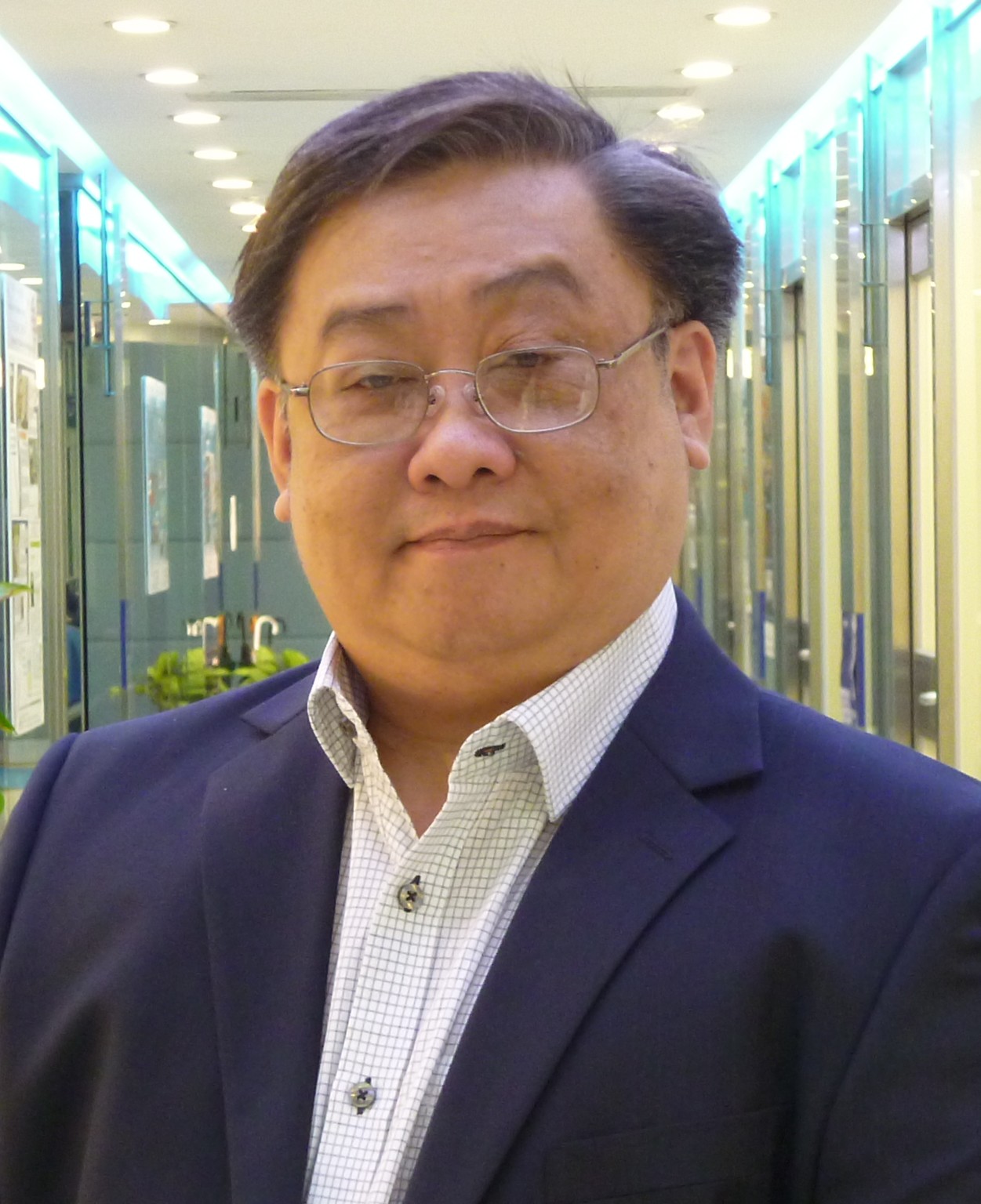
The Hongkong Polytechnic University, China
Eric Tsui is former Associate Director of the Behaviour and Knowledge Engineering (BAKE) Research Centre and currently a Senior Project Fellow at the Educational Research Centre at The Hong Kong Polytechnic University. He is the coordinator of the Hong Kong MIKE award and a Vice President of the Hong Kong Knowledge Management Society. A recipient of many Knowledge Management and E-Learning international awards including the Knowledge Management Award for Excellence in 2021 and the QS Wharton Reimagine Education Gold Award (Asia) in 2015, Professor Tsui was twice listed as an exemplary/outstanding academic in PolyU Annual Reports in the last 8 years.
Abstract: This talk will summarise recent trends and driving forces behind the advancement and adoption of educational technologies and new pedagogies in higher education. Such technologies include, but not limited to, Artificial Intelligence, Extended Reality (e.g. Augmented/Virtual Reality and the metaverse), and gamification. The non-technical issues that need to be addressed as a result of adopting and leveraging these technologies are even more worthy of discussion e.g. re-design of assessments, AI competencies for teachers and students, and the ethical issues in the use of AI software. Variations in the emphasis and applications of educational technologies between Western and Asian institutions will also be outlined.

Tokyo University of Technology, Japan
In my research laboratory, we have been engaged in a wide range of research fields to clarify still unmeasurable and uncovered human intelligence scientifically, so that we can apply its acquired knowledge to computer software. The followings are research topics we are now interested in, for example:
(1) Blockchain3.0 technology to keep reliability of knowledge that AI systems discover and create automatically from other data and knowledge other computers acquire,
(2) clarifying a computational model of human higher brain functions to create games of tailor-made cognitive rehabilitation programs based on it, and
(3) smart NLP (Natural Language Processing) systems with ability of acquiring unknown words and syntactic rules inductively based on ILP (Inductive Logic Programming) methodology.
Abstract: Language education lies at the heart of how people learn to think, understand others, and participate in society. In recent years, generative AI and conversational AI have begun to reshape learning support in exciting ways, opening new possibilities for personalized guidance, practice, and feedback. At the same time, education calls for AI systems that are not only powerful, but also accurate, explainable, adaptive to learners, and ultimately accountable to human judgment. This keynote explores the future of language education through the lens of human-centered and trustworthy AI. It considers language learning in a broad sense, including mother tongues, foreign languages, classical languages, sign languages, braille, and programming languages, and argues that language education should be understood as a process of meaning making, self-expression, dialogue, and mutual understanding rather than as simple skill training. From this viewpoint, the talk introduces a range of educational possibilities enabled by AI: learning-log analysis, conversational support, personalized content generation, automated feedback, and assistance in assessment. It also reflects on larger issues such as multicultural coexistence, inclusiveness, and the ethical use of AI in classrooms and beyond. Rather than replacing teachers or learners, human-centered AI should help people ask better questions, notice important patterns, and deepen their own understanding. It should also support learners who are often marginalized in traditional educational settings, including learners with disabilities, older adults, and those from diverse linguistic and cultural backgrounds. To ground these ideas, the keynote draws on research in language acquisition, dialogue robots, and mind models, and introduces Pddin, a soothing Japanese dialogue robot, and UWAS-I, a Japanese unknown-word acquisition system. These systems suggest how AI can learn from interaction and support human communication in ways that are sensitive, adaptive, and educationally meaningful. Pddin, for example, is designed to create a calm and empathetic interaction space, while UWAS-I explores how machines can acquire unknown words from context and dialogue. By bringing together language science, educational practice, and AI design, this talk aims to outline a future in which trustworthy AI strengthens human learning while respecting human responsibility, diversity, and the broader purposes of education. In the end, the keynote emphasizes that the goal is not to build AI that replaces human judgment, but to create educational environments where AI and humans work together to support growth, reflection, and meaningful dialogue.

The University of Manchester, UK
Dr. Pietro Paolo Frigenti is an Associate Professor at Alliance Manchester Business School, The University of Manchester. Pietro is a Senior Fellow of the Higher Education Academy (SFHEA), a Certified Management & Business Educator (CMBE), a Chartered Marketer (CMktr) recognised by the Chartered Institute of Marketing (CIM), and a Chartered Manager (CMgr) recognised by the Chartered Management Institute. His research interests lie primarily in the areas of education, tourism, digital marketing, and branding.